Encryption is one of the most effective ways to protect sensitive data, applications, and digital transactions. However, encryption is only as strong as the way cryptographic keys are generated, stored, and controlled.
A Key Management System (KMS) is a platform designed to securely create, manage, store, distribute, and retire cryptographic keys throughout their lifecycle. By centralizing these processes, organizations can protect sensitive information while maintaining control, compliance, and operational efficiency.
KMS solutions are widely used in enterprise environments, cloud platforms, financial systems, IoT infrastructures, and anywhere encryption is required to secure data and digital identities.
Why Key Management Matters
Cryptographic keys are the foundation of many security mechanisms, including data encryption, digital signatures, authentication, secure communications (TLS/SSL), identity management, or blockchain transactions.
Without proper key management, organizations face significant risks. Keys may be lost, duplicated, accessed by unauthorized users, or remain active after they should have been revoked.
A KMS helps organizations maintain full visibility and control over their cryptographic assets, reducing the risk of data breaches and compliance failures.
Core Functions of a Key Management System
The most effective KMS solutions support the full lifecycle of cryptographic keys.
- Key Generation: A KMS securely generates cryptographic keys using approved algorithms and strong entropy sources.
- Secure Storage: Keys are stored in protected environments, often secured by Hardware Security Modules (HSMs) to prevent unauthorized access.
- Key Distribution: Applications, services, and devices can securely retrieve keys when needed for cryptographic operations.
- Key Rotation and Expiration: Keys can be automatically replaced or rotated based on security policies, reducing the risk of long-term compromise.
- Backup and Recovery: Secure backups ensure keys can be restored in case of system failures or disasters.
- Revocation and Deletion: Compromised or expired keys can be revoked immediately to prevent further use.
Benefits of Using a KMS
Implementing a centralized key management system provides several advantages:
- Centralized control: All cryptographic keys are managed from a single platform, reducing complexity and improving visibility.
- Improved security: Keys are protected using strict access controls and secure storage mechanisms.
- Regulatory compliance: KMS solutions help organizations meet security requirements from standards and regulations such as GDPR, PCI DSS, or ISO 2700.
- Operational efficiency: Automation of key lifecycle tasks reduces manual errors and simplifies management.
- Scalability: Organizations can manage thousands or even millions of keys across applications, devices, and infrastructures.
Types of Key Management Systems
Organizations can deploy KMS solutions in different ways depending on their security requirements and infrastructure.
Cloud-Based KMS
Cloud KMS services are provided by cloud platforms and allow organizations to manage keys through hosted infrastructure. These solutions are typically easy to deploy and scale but rely on the security model of the cloud provider.
On-Premises KMS
On-premises KMS solutions are deployed within an organization’s own infrastructure. They often integrate with Hardware Security Modules (HSMs) for stronger key protection and offer greater control over cryptographic operations.
Hybrid KMS
Hybrid models combine on-premises security with cloud scalability. Keys may be stored in hardware devices within the organization while management interfaces are hosted in the cloud.
KMS and Hardware Security Modules (HSMs)
While a KMS manages the lifecycle and access policies of keys, a Hardware Security Module (HSM) provides the physical protection of those keys.
An HSM is a dedicated hardware device designed to securely generate, store, and manage cryptographic keys while performing critical cryptographic operations such as encryption, decryption, digital signing, and authentication.
Many enterprise KMS solutions rely on HSMs to ensure that sensitive key material never leaves secure hardware boundaries. This approach provides a higher level of protection and helps organizations meet strict security and regulatory requirements such as eIDAS, PCI DSS, HIPAA, and GDPR.
KMS in Modern IT Environments
Today, organizations must manage cryptographic keys across increasingly complex infrastructures that may include:
- Multi-cloud environments
- Containerized applications
- Databases and storage platforms
- Virtualized systems
- IoT devices
- DevOps pipelines
A modern KMS enables secure integration across these environments, ensuring consistent key policies regardless of where applications are deployed.
How Securosys Approaches Key Management
Securosys provides a key management solution designed for organizations that require high-assurance cryptographic security combined with flexible integration across modern IT environments.
The Cybervault KMS is built directly on Securosys Primus HSM and CloudHSM, ensuring that cryptographic keys are generated, stored, and used within hardware security modules certified to FIPS 140-2 Level 3 (with FIPS 140-3 in certification) and Common Criteria EAL4+.
To simplify integration across diverse infrastructures, the platform natively supports widely adopted standards and interfaces such as REST APIs, KMIP, PKCS#11, Java Cryptography Extension (JCE), and Microsoft CNG. This allows applications, storage systems, databases, virtualization platforms, and cloud services to securely access cryptographic operations without requiring custom integrations.












 Bring Your Own Key (BYOK)
Enhance cloud security and compliance with Securosys HSM and BYOK integration
Bring Your Own Key (BYOK)
Enhance cloud security and compliance with Securosys HSM and BYOK integration
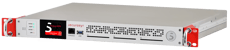 HSM overview
Our Primus HSM guarantees secure generation, storage, and management of digital identities, encryption keys, and assets.
HSM overview
Our Primus HSM guarantees secure generation, storage, and management of digital identities, encryption keys, and assets.
 CloudHSM
 provides a seamless, secure, and cost-effective path to achieving full compliance with data security requirements and regulations.
CloudHSM
CloudHSM provides a seamless, secure, and cost-effective path to achieving full compliance with data security requirements and regulations.
 CloudHSM Portfolio
Our CloudHSM offerings provide versatile solutions tailored to meet diverse security needs. Multiple Solution Architectures cover most of the requirements and with over 30 pre-configured and well-documented services
CloudHSM Portfolio
Our CloudHSM offerings provide versatile solutions tailored to meet diverse security needs. Multiple Solution Architectures cover most of the requirements and with over 30 pre-configured and well-documented services